mercredi 28 mars 2012

Football match


It’s since one month that Eh wanted to see Horsens playing football, so we decided to make him happy! We took ticket for the match AC Horsens against FC Nordsjælland, a city near Copenhagen called Farum.


HISTORY OF THE CLUB:

AC Horsens (Alliance Club Horsens) was founded on 1 January 1994 of HFS and FC Horsens in order to assemble the best players on a single elite team (league). Horsens played in the First Division (named Superliga) for the first time in 2005, and was relegated in 2009 to be promoted for the second time to the Superliga last year.


To summarize, AC Horsens has spent nine seasons in the Highest Danish League, 34 seasons in the Second Highest Danish League and 24 seasons in the Third Highest Danish League. They also participated 2 times to the European Cup: the UEFA Intertoto Cup in 1968 and 1970.

Also, in AC Horsens, there are 2 stars: Martin Retov and Johan Absalonsen because they already played with the national team of Denmark, so they are famous. Here are their technical sheets:

Retov and Absalonsen


STADIUM:

Furthermore, Horsens is lucky to possess a great stadium. It was built in 1927 and inaugurated on 16th June 1929. The clubhouse was built later, in 1955 and was rebuilt in 1979 and in 1989. So, this stadium can be containing approximately 6,000 spectators in 2001.

CASA Arena Horsens


In January 2007 the first sod was turned to the city's new stadium: CASA Arena Horsens. The eastern grandstand was demolished in February to make room to reverse course and show CASA Arena Horsens now forms an attractive setting for AC Horsens' home matches.
The four masts, which lights up over CASA Arena Horsens is mounted at a height of 37 meters above the ground and each tower weighs 25 tons. The illuminated with 1,000 lux, but is prepared to 1,400 lux.


CASA Arena Horsens

Today, CASA Arena Horsens a spectator capacity of 10,400, of which 7,500 are seated. In the autumn of 2009 was really embarked on building skyboxes and the new lounge. There are 18 skyboxes at the top level of the south grandstand and on the floor just below there is space for about 900 guests in the new exclusive Hansen / Nissen Lounge. Now the stadium is use to receive big concert like AC/DC or U2 in 2010.


MATCH:

So we went to see the match AC Horsens (the 3rd) against FC Nordsjealland (the 2nd).


AC Horsens - FC Nordsjaelland

A ticket for see a match depends of your age and the rostrum you want to be seated. There are prices for students, young (under 15 years old) and pensioners (over 65 years old). Ticket cost between 50kr and 70kr (~6.5 – 9.5€) for young and pensioners, and 60kr (~8€) for students, otherwise, they cost between 100kr and 140kr (~13.5 – 19€). It’s very cheap compared to prices in England, Spain or in France where ticket cost 30-55€ and more for the most famous club!

This announced probably a good game, but it was not the case. The level looked like the French second division. In fact, players make a lot of technical errors like bad pass or bad shoots, and the play was very slow and boring! Furthermore, Horsens lost 0-2! But all the same we saw goals!

Fortunately, the weather was shinning, the atmosphere was friendly with a group of motivated supporters, singing the glory of the club with incomprehensible Danish lyrics!


Fans


"What a shame!!!"

This is a sheet summarizing the match:


To conclude, Eh was so disappointed and sad (he cried at the end...) that we don’t think we will return again to see another match! We think Denmark has a good football team, but for Danish, it’s not their favorite sport, we think about Handball for example. So we spend good time together even if the game was boring and Horsens lost.


http://www.wikipedia.com

http://www.achorsens.dk
http://en.wikipedia.org/wiki/Football_in_Denmark
http://www.soccerfame.fr/match/260879/horsens/nordsjaelland

dimanche 18 mars 2012

The surprising story of tatoos in Denmark


Eh told us that a lot of Danish boys and Danish girls have tattoos, and in fact he was right! Last time, we went to the swimming pool and we saw many tattoos on the legs, backs, arms and shoulders of people. So we tried to discuss about it with a Danish student and one answer us that a lot got tattoo, it’s like buying new clothes or a pair of shoes. But this didn’t explain the origin of this mode. So we search on the web and we found that tattoos and Danish have a long story, and Copenhagen is the origin.

Today, tourists walk in the Copenhagen's waterside quarter of Nyhavn, take photos of the sailing boats and brightly painted houses along the quays and walkways, while others enjoy the old-fashioned bars and beer houses. But very few people stop at the distinct yellow storefront of Nyhavn 17. The modern history of tattooing in Denmark began in the late 19th century, when sailors poured into Nyhavn sporting tattoos they had gathered on their journeys.

Nyhavn 17

In 1951, a Life magazine article shows a shirtless King Frederik IX, a sailor and former King of Denmark, showing off his extensive collection of tattoos, including the handiwork of Tattoo-Ole (the oldest tattoo shop in the world). Given such royal endorsement, tattoo culture gained popularity in Denmark, while bringing awareness of Danish tattooing to a world audience.

King Frederick IX of Denmark


However, popularity brought its own problems: Copenhagen's notorious motorcycle gangs became regular customers at tattoo parlors, which expanded into the city's roughest neighborhoods. Over time, tattooing became associated with criminality and lawlessness.


In response, the Danish government passed regulations in 1965 that banned the giving of tattoos to children under 18 and outlawed tattoos on the hands, feet, neck and face. Eventually, Copenhagen lost its preeminence as a regional tattoo hub.

The old cliche about tattoos and sailors is waterproof, there were all inspired by sailors who would come from the United States and other places. Denmark and Nyhavn in particular, was the headquarters for tattooing in Scandinavia for nearly 100 years, from the 1890s to 1975. And we found a great video with Jon Nordstrøn, a famous author, who explain the Danish tattoing:


So to be fashion" Eh thought to get a tattoo, but he don't know which tattoo yet!


Eh decided to go get more information about tattoos. So we accompanied him to the tattooist. The reception was a bit cold, we wanted to know the price of a of approximately 25 cm², and he replied that the price depends of several factors: the number of square centimeter of skin to be tattooed, the difficulty of drawing and detail required, with or without colors and the number of hours that the tattooist will have to spend.

He told us that on average, a tattoo of this size costs 700kr (about 93 Euros). The employee was not very talkative, and we understand that if we don’t wanted tattoo, we cannot stay. We were still able to ask him what tattoos people get here. He told us that everybody want different tattoos, nothing in particular is required.


http://vimeo.com/22262374
http://english.people.com.cn/90001/90777/90853/7355492.html
http://portable.tv/talks/post/a-colourful-history-tattooing-in-denmark/
http://mobclub.com/resources/productmaster/Monkey%20Tattoo%201019.jpg
http://tattoos-and-art.com/wp-content/gallery/monkey-tattoos/100_1927_large.jpg
http://fa.img.v4.skyrock.net/fa5/frederictattoo/pics/761418533_small.jpg

dimanche 4 mars 2012

Fishing in Horsens


Denmark comprises amazingly varied fishing waters despite of his small size. We can fish on his extensive coastline, streams, creeks and fjords. Since 33 years, Denmark has developed many laws to protect the environment. In 1973 already, a law was passed about it, the first in the world to take up this problem, and since then, the protection has been continuously improved.

We are lucky that Horsens is a coastal city, it is perfect to explore the joys of fishing; especially with his “Green Lagoon” is the perfect place. We decided to go to Stendballe because it is the nearest and easiest place to access, but there are a lot of others places in the Fjord. So let’s go!

Green Lagoon

But before leaving, be aware that as in France, a license is required to fish for people between 18 and 65 years old, for others it’s free.

There are two different licenses: one to fish in streams and lakes, and another to fish in the sea. You can buy it on internet in post offices or in local tourist offices. For tourists (like us) a license valid for one day can be obtained at 40kr (~5.5€) or one week at 130kr (~17.5€). But it’s maybe more interesting to buy a license for one year because it costs only 185kr (~25€). Money from fishing licenses is fully invested in the modernization of fishing facilities.


So what we can fish near Horsens? Generaly in Denmark, you can fish:

What we can fish


Eh has chosen the hooks for us and we tried. The fjord is not very deep and we have to throw the hook far away to find the depth. After many throw, we fished only seaweed and stones… We tried again but nothing.


Bad day for fishing, too bad!! However, maybe we caught nothing, but we found some molds to eat, not to return empty-handed.. 


lundi 20 février 2012

Our arrival and cost-of-living in Denmark


After a three-day-trip through Netherland, Germany and Denmark by car, we discovered Horsens and Via University College. The University is a huge building composed of 6 blocks of classroom with a big Hall where you can eat due to the cafeteria, and connect to the web.

Living room

Bathroom

Kitchen

Bedroom


 We installed in our furnished two-person room, two minutes from the central hall. 


We discovered the surrounding of the University while walking along the Fjord of Horsens and to downtown. We enjoyed the many large houses along the coast, and we thought that a Danish must have a good salary to be able to afford this kind of house.

Horsens Fjord

House on the Fjord

 And we thought about this again when we were to the supermarket, and saw the price of some foodstuff.

The price of products is 20% higher than in France about. Of course there are differences:


Cheaper than in France:
  • Candles, flowers and plants
  • Cheese, rye bread, fish
  • Organic products generally: butter, bread, milk, eggs, flour ...
  • Rental homes for the holidays
  • Cigarettes (4,30€ (32kr) package)


Same price as in France:
  • Gasoline
  • Pasta, sausages
  • Beer
  • Shoes
  • Cafeteria, snack, fast food (hot dogs, burgers ...).


A little more expensive than in France (20-40%):
  • Fruit juice, coffee and wine
  • Meat, canned                                                                                                                    
  • Clothing
  • Camping, B & B (Bed and breakfast), hostels

Oh! It's too expensive!!

Much more expensive than in France (50-200%)
  • Cars
  • Soda (2€ (15 kr) of the Coke bottle (1.5l) in the supermarket), mineral water or carbonated (15 kr too)
  • Alcohols strong (2 times more than in France on average)
  • Chips, chocolate, sweets
  • Fresh fruits and vegetables (peppers, tomatoes, lettuce, cherries ...)
  • Restaurants (usually around 33,60€ (250 kr) for the menu appetizer, entree, dessert)
  • Hotels.

2. Where to shop?
  • Supermarkets: Føtex (best), and the immense SuperBrugsen Bilka and Obs
  • Smaller: Spar, DagliBrugsen, LokalBrugsen
  • The Discounters: Netto (better quality), Aldi, Fakta, Alta, ...
  • Grocery Stores and also a bit of food in the kiosk (selling news, tobacco, beverages)


Be careful, most stores close at 5:30 p.m. on weekdays and on Saturday at 4 p.m. Fortunately, supermarkets, themselves, often close to 7 p.m or 8 p.m and 10 p.m kiosk around.


In big cities you will find department stores, like Galeries Lafayette: Salling, Store.

Glass bottles and plastic (beers, sodas, water, sometimes wine) are recorded: the purchase, you will be charged in addition to 1.25-4 Kr per item, you will get back to back (machine Returflasker or counter). In addition, plastic bags are still paying (Applied Ecology).


But we believe that the high prices have no consequence for Danish people. Indeed, in a bar, we met a Danish welder of thirty year old. He told us that he earns 200 krones per hour (~27€/h), and this is the average wage. There is no official minimum wages but usually it is 100 krones per hour (~13.5€/h). He also told us that people who study such as 5 years of studies after their Bachelor starts with a salary of 400 krones per hour (~54€/h).


After this meeting, we inquired about this difference between Denmark and France. We found that Denmark have the highest salary of Europe, while France are in 9th position.

This following chart gives the average salaries adjusted to the cost of living in each country in Europe:


So we must be very careful about what we buy, especially bananas for Eh Erasmussen! If we are other information about the cost of living in Denmark, we add another article in this post.


vendredi 20 janvier 2012

GOOD DEALS

Get around

A ticket purchased on a local bus is valid for one hour and costs DKK 19 A ten-trips card costs DKK 115, each trip is valid for an hour as well. A great way to discover Horsens is by bike. You can rent bikes at different locations, ask at the tourist office located at Søndergade 28.

What can we visit?


Bygholm Park

institutioner.horsenskom.dk

 Vitus Berings Park
panoramio.com
Søndergade (High Street)  
advokatoledahl.dk

The museums

The old prison( closes by the end of 2008 )  

the special churches

Abbaye church
 panoramio.com

Annual event

One of the largest cultural events in Horsens is the annual European Medieval Festival on the last Friday and Saturday in August. The town centre of Horsens is transformed into the largest medieval market town in Northern Europe with activities and entertainment for families and children of all ages.


erasmusu.com


What can we buy ?

  • Bytorv Horsens : It is a Shopping Centre located on the highstreet, Søndergade.
  • Bilka : It is the largest supermarket in the town of Horsens.

Where can we eat?*
  • L'estragon (Restaurant), Sønderbrogade 4, 8700 Horsens. Restaurant L'estragon takes the French kitchen as its starting point and combines it with ingredients and methods of preparation from all over the world.
  • Cafe Corfitz (Cafe and restaurant), Søndergade 21, DK-8700 Horsens
  • China House (Restaurant), Søndergade 15,  DK-8700 Horsens
* This is only a very little selection of the restaurants and cafees in Horsens.

Bars and Coffees

There is a wide selection of cafées and bars in Horsens,among many:

·         Benediktes-Grønnegade 15,8700 Horsens
·         Hekkenfeldt-Graven 17-19,8700 Horsens
·         Cafe Koks,Nørregade 7, 8700 Horsens
·         Corfitz,Søndergade 21, 8700 Horsens


Where to stay?

There are a few primitive, but free, camping grounds available
  • Best Western Hotel Danica, Ove Jensens Alle 28. Rooms from DKK 895.
  • Jørgensen Hotel, (Centraly located). Rooms from DKK 695.  
  • Scandic Hotel Bygholm Park, Schüttesvej 6. Rooms from DKK 750.
  • Danhostel Horsens Vandrerhjem (Youth hostel), Flintebakken 150. Rooms from DKK 400 - shared room from DKK 200.
  
(Source : www.wikitravel.org)

jeudi 19 janvier 2012

THE TRAVEL

During this journey, we will take advantage of visit other Northern cities of Europe. We decided to stop over Amsterdam and Hamburg, because these cities are almost on the way to Horsens, and seem very interesting to visit.


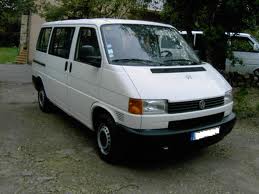
We travel with two other students (Robin and Alexandre)  in a Volkswagen Transporter.


auto.mitula.fr


We will leave Angers the 2nd of February at 8 a.m. to arrive at 5 p.m. in Amsterdam with approximately 8 hours on the road and an additional hour for breaks and lunch. Then, we will continue our journey to Hamburg in the beginning of the afternoon, and we will arrive 5 hours later to the city. And to finish, we will leave Hamburg the 4th of February to go to Horsens after 3 hours on the road.

In total, we will spend nearly 15 hours in the car, drive 1600 km and cross 3 countries during the journey. The total of the travel is around 150 Euros of gasoil and 40 Euros for the toll, only in France.


(source: www.mappy.com)

samedi 14 janvier 2012

WHERE ARE WE GOING AND WHY?


I am Eh and I'll tell you my trip with two French students Samuel and Julien who are in a French School of Engineering , specialising in Health, Safety & Environment. We are going three months at the University of Horsens in the Danish region of Midtjylland to complete our first year and discover another culture, exchange with other students, to know another way of life and of course progress in English and improve our knowledge in our field!


Horsens:
This is a Danish city in east Jutland and his population is 80,000 inhabitants. Horsens is 50 km south of Aarhus and 30 km north of Vejle, and 200 km from Copenhagen.
Today, the city is undergoing a positive development with new industry moving to Horsens, or expanding their activities already in Horsens. A lot of electronics and graphical companies are based there. Horsens also has the only Industrial Museum in Denmark.


no.wikipedia.org

VIA University College:

VIA University College is offering bachelor courses of all kinds in all of Central Denmark Region. VIA University College is Denmark's third largest educational institution after Copenhagen University and Aarhus University, with approximately 20,000 students, and operates within the pedagogical and social professional, the health professional and the technical-commercial area. It is headquartered in Aarhus, but the activities anchored on seven campuses spread over 39 locations throughout the region.

viauc.dk

The Campus in Horsens holds most of the engineering, the technical and the business programmes of VIA University College. The increasing campus population is now around 3,500 students with 1200 are international students coming from more than 40 different countries.

Over there, we will have to validate five courses:
Applied statistics for engineers  : 4 ECTS                             
Sustainable Energy : 4 ECTS
Waste Water treatment : 4 ECTS
Water Supply : 2 ECTS
Soil Contamination : 2 ECTS

(sources: www.viauc.com; www.wikipedia.org; www.horsens.dk)